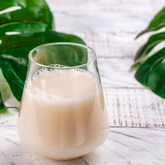
Veganuary ist die perfekte Zeit, um eine pflanzliche Ernährung auszuprobieren, aber für viele Menschen können die ersten Wochen Verdauungsveränderungen wie Blähungen, Gase oder Unwohlsein mit sich bringen. Die gute Nachricht? Diese Symptome sind oft vorübergehend und können durch eine wichtige Nährstoffgruppe positiv beeinflusst werden: fermentierbare Ballaststoffe.
In Kombination mit ausreichender Flüssigkeitszufuhr und frisch zubereiteter Pflanzenmilch werden fermentierbare Ballaststoffe zu starken Verbündeten für die Darmgesundheit, die Verdauung und das langfristige Wohlbefinden.
Was sind fermentierbare Ballaststoffe?
Fermentierbare Ballaststoffe sind eine Art von Ballaststoffen, die Ihre Darmmikrobiota ernähren, die Billionen nützlicher Bakterien, die in Ihrem Verdauungssystem leben. Im Gegensatz zu unlöslichen Ballaststoffen werden fermentierbare Ballaststoffe von Darmbakterien im Dickdarm abgebaut (fermentiert).
Während dieses Prozesses produzieren Bakterien kurzkettige Fettsäuren (SCFAs) wie Butyrat, Acetat und Propionat, die unerlässlich sind für:
- Unterstützung der Integrität der Darmschleimhaut
- Reduzierung von Entzündungen
- Verbesserung der Nährstoffaufnahme
-
Regulierung der Verdauung und des Stuhlgangs
Warum Veganuary die Ballaststoffzufuhr erhöht (und warum das gut ist)
Pflanzliche Ernährungsweisen enthalten von Natur aus mehr fermentierbare Ballaststoffe als tierische Ernährungsweisen. Während Veganuary konsumieren Menschen oft mehr:
- Nüsse und Samen
- Hafer und Vollkornprodukte
- Hülsenfrüchte
- Obst und Gemüse
Obwohl diese plötzliche Zunahme den Darm zunächst herausfordern kann, führt sie letztendlich zu einem vielfältigeren und widerstandsfähigeren Mikrobiom, insbesondere wenn die Ballaststoffzufuhr bewusst eingeführt wird.
Wichtige fermentierbare Ballaststoffe in pflanzlichen Zutaten
Viele Zutaten, die in hausgemachter Pflanzenmilch und pflanzlichen Mahlzeiten verwendet werden, sind reich an fermentierbaren Ballaststoffen:
- Nüsse & Samen
- Cashews
- Mandeln
- Haselnüsse
- Hanfsamen
Enthalten lösliche Ballaststoffe und resistente Stärken, die nützliche Darmbakterien nähren.
- Hafer
Reich an Beta-Glucanen, einem gut erforschten fermentierbaren Ballaststoff, der nachweislich die Darmgesundheit und den Cholesterinstoffwechsel verbessert.
- Hülsenfrüchte
Enthalten Galacto-Oligosaccharide (GOS), die selektiv nützliche Bakterien wie Bifidobakterien ernähren.
Warum frische Pflanzenmilch leichter verdaulich ist
Gekaufte Pflanzenmilch enthält oft Gummi, Stabilisatoren und Emulgatoren, die empfindliche Verdauungssysteme reizen können.
Mit Milky Plant Plus können Sie frische, zusatzstofffreie Pflanzenmilch herstellen, die bewahrt:
- Natürliche Ballaststoffe
- Mikronährstoffe
- Gesunde Fette
Frisch zubereitete Pflanzenmilch ermöglicht es fermentierbaren Ballaststoffen, mit Ihrem Darm zu arbeiten, nicht gegen ihn, insbesondere während Ernährungsumstellungen wie Veganuary.
Vorteile von selbstgemachter Pflanzenmilch für die Darmgesundheit:
- Keine unnötigen Zusatzstoffe
- Bessere Ballaststoffintegrität
- Verbesserte Nährstoffbioverfügbarkeit
-
Anpassbar für empfindliche Verdauung
Hydration: Das fehlende Glied in der Faserverdauung
Ballaststoffe und Wasser arbeiten als Team. Eine erhöhte Ballaststoffzufuhr ohne ausreichende Flüssigkeitszufuhr kann die Verdauung verlangsamen und Blähungen verschlimmern.
Wie gefiltertes Wasser die Darmgesundheit unterstützt:
- Hilft Ballaststoffen aufzuquellen und sich reibungslos durch den Verdauungstrakt zu bewegen
- Unterstützt die Fermentation ohne Verstopfung
- Verbessert die Mineralstoffaufnahme
- Verbessert den Geschmack und die Qualität von Pflanzenmilch
Gefiltertes Wasser reduziert Verunreinigungen wie Chlor, die sich negativ auf die Darmbakterien auswirken können, und ist somit ein wichtiger Begleiter während des Veganuary.
Um die Verdauung zu unterstützen, während die fermentierbaren Ballaststoffe erhöht werden:
- Langsam anfangen – Ballaststoffzufuhr schrittweise erhöhen
- Regelmäßig hydrieren – Den ganzen Tag über gefiltertes Wasser trinken
- Frische Pflanzenmilch wählen – Hergestellt mit Milky Plant Plus
- Nüsse & Samen einweichen – Verbessert die Verdaulichkeit
-
Auf den Körper hören – Jeder Darm passt sich in seinem eigenen Tempo an
Veganuary geht nicht nur darum, was man isst, sondern darum, den Körper während des Übergangs zu unterstützen. Fermentierbare Ballaststoffe sind essentiell für eine langfristige Darmgesundheit, wirken aber am besten in Kombination mit sauberem Wasser und frischen, minimal verarbeiteten Lebensmitteln.
Mit Milky Plant Plus und The Watery schaffen Sie die ideale Umgebung für Ihren Darm, um auf natürliche, sanfte und nachhaltige Weise zu gedeihen.
Ihr Darm wird es Ihnen danken.